


The first time a child picks up a pencil and starts scribbling, it can be both funny and exciting. They might hold the pencil in a fist, use all their fingers, press too hard, or keep changing hands.
And that’s okay.
Learning to hold a pencil is a gradual process. Children first need to develop the small muscles in their hands and fingers before they can comfortably control a pencil.
So, if your child isn’t holding a pencil “correctly” yet, there is no need to panic. A little everyday practice through drawing, colouring, play dough, and other simple activities can go a long way.
What Is the Correct Way for a Child to Hold a Pencil?
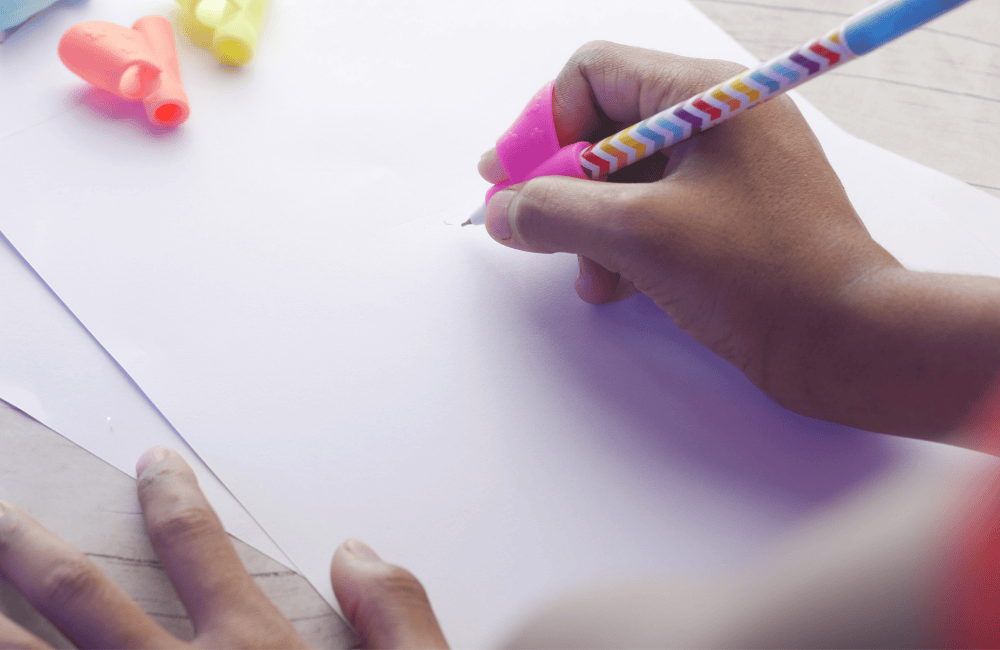
The tripod grip is one of the most common pencil grips used for handwriting.
It means the pencil is held between the thumb and index finger, with the middle finger supporting it underneath. The hand should feel relaxed rather than tightly gripping the pencil.
But here’s something parents often don’t hear: there isn’t just one grip that every child must use.
Some children naturally develop a slightly different grip and can still draw and write comfortably. What matters most is that the child can control the pencil without pain, excessive tension, or getting tired very quickly.
When Do Children Learn to Hold a Pencil?
Children start experimenting with crayons and pencils when they are quite young.
A toddler may simply wrap their whole hand around a crayon and make big scribbles. Over time, those movements become more controlled. They start using their fingers, making smaller marks, and eventually become more comfortable with a mature pencil grip.
There is no magic age when this suddenly happens.
Some children get there quickly, while others need more time. Both can be perfectly normal.
How Can I Teach My Child to Hold a Pencil?
The best approach is to work on the skills behind pencil control rather than focusing only on the fingers holding the pencil.
Here are some simple things you can do at home.
1. Let Them Draw — Even If It’s Just Scribbling
Before asking your child to write letters, give them plenty of opportunities to draw.
Let them make circles, dots, lines, faces, flowers, cars, houses, or completely random scribbles.
You don’t need to correct what they’re drawing.
You can make it into a little game. Ask them to draw a road for a toy car, make raindrops for a cloud, or draw a big circle around their favourite toy.
The more children use drawing tools, the more comfortable they become with them.
2. Give Short Crayons a Try
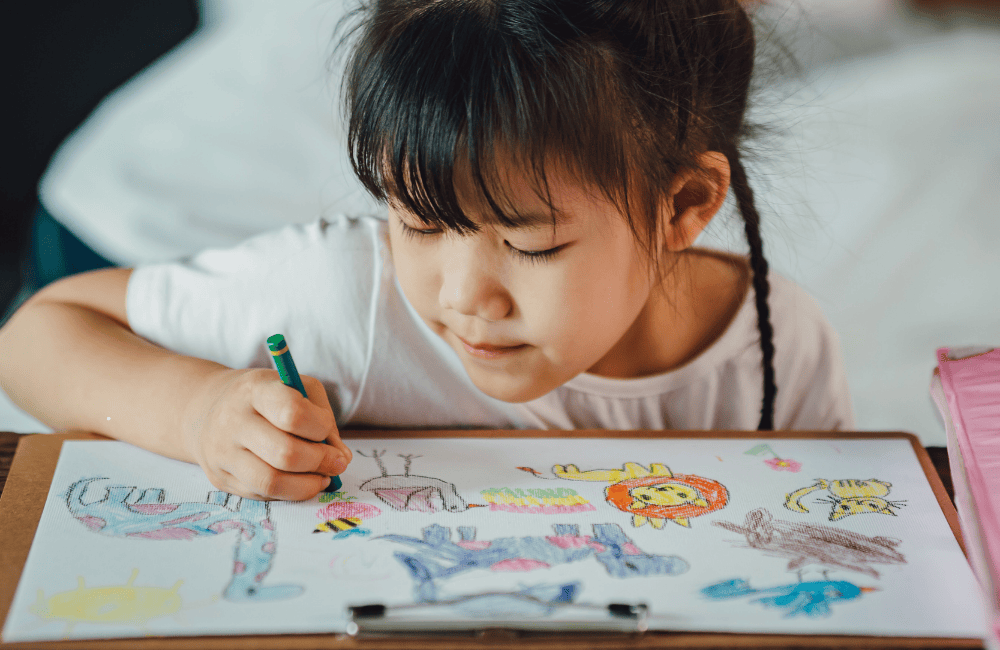
Long pencils can be surprisingly difficult for small hands.
Short crayons or pencils are often easier to manage because there is less for a child to grip with their whole hand. They can encourage the use of the fingertips instead.
You don’t have to buy anything special. Even breaking an ordinary crayon into smaller pieces can work.
And don’t worry about making everything look like a lesson. Let your child experiment.
3. Show Them How to Use the Tripod Grip
Once your child is ready, you can gently introduce the tripod grip.
One simple trick is the pinch-and-flip method.
Ask your child to pinch the pencil close to the tip using their thumb and index finger. Then let the pencil rest against the middle finger and gently move it into a comfortable position.
It can help to demonstrate it yourself first.
Instead of saying, “You’re holding it wrong,” try:
“Let’s try it this way and see if it feels comfortable.”
That small change in language can make pencil practice feel much less stressful.
4. Strengthen Little Hands Through Play
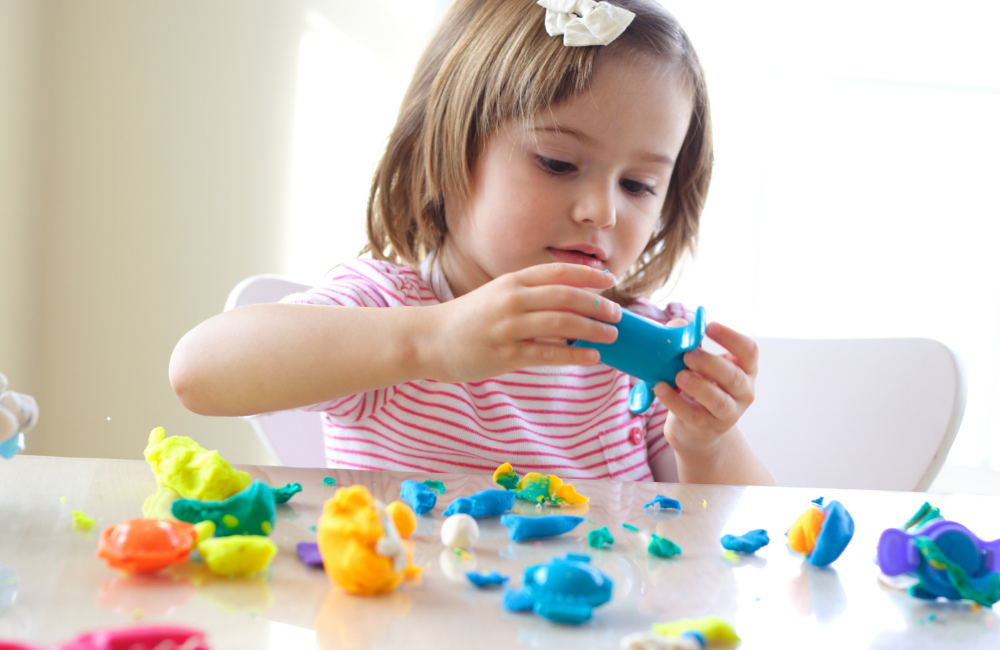
Here’s the part many parents don’t realise: pencil practice doesn’t always have to involve a pencil.
The hands and fingers need strength and coordination before writing becomes easy.
Simple activities can help build these skills:
- Playing with play dough
- Building with blocks
- Threading beads
- Peeling stickers
- Using clothes pegs
- Picking up small objects
- Tearing paper
- Using child-safe tweezers
- Opening containers
- Squeezing and rolling play dough
These may look like ordinary play, but children are practising the same small hand movements that they will eventually use for writing.
5. Try Pre-Writing Activities Before Letters
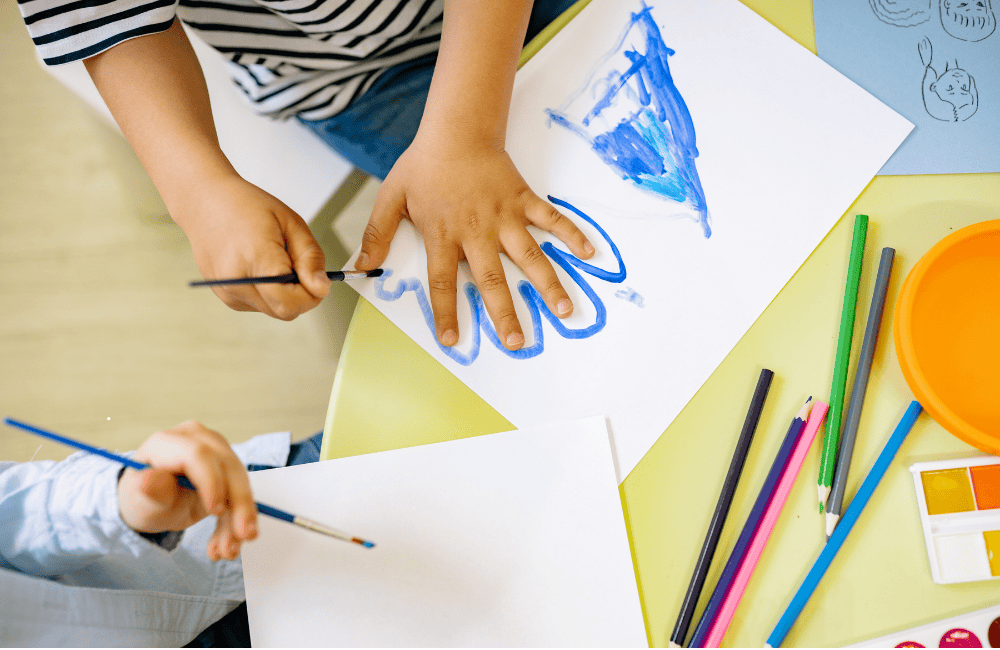
If your child isn’t ready to write the alphabet, that’s absolutely fine.
Start with simple patterns.
Try drawing a line and asking your child to copy it. Then try curves, circles, waves, and zigzags.
You can turn them into little pictures:
- A wavy line can become ocean waves.
- A straight line can become a road.
- A spiral can become a snail.
- Dots can become stars.
- A circle can become a balloon.
This makes pre-writing practice feel more like drawing and less like homework.
What Are Pre-Writing Skills?
Pre-writing skills are the basic movements children learn before they start forming letters and numbers.
These include controlling lines, curves, shapes, and simple patterns.
They are an important part of getting ready for handwriting.
6. Show, Don’t Keep Correcting

Children learn a lot by watching us.
If you’re trying to teach pencil grip, sit beside your child and show them how you hold the pencil.
You might say:
“Look at my fingers. Let’s try it together.”
Then give them a chance to try.
If their fingers move again, that’s okay. You don’t need to stop them every few seconds.
Too many corrections can make a child feel that they’re doing something wrong every time they pick up a pencil.
Gentle reminders work better.
7. Keep Practice Short
Young children don’t need to sit at a table for half an hour practising pencil grip.
In fact, long sessions can make them tired and frustrated.
A few minutes of drawing, colouring, tracing, or playing a fine motor game may be enough.
If your child starts losing interest, let them stop.
You can always try again tomorrow.
The aim is to build a skill gradually, not to finish a worksheet.
Easy Pencil-Control Activities You Can Do at Home
If you’re looking for simple activities to try with your child, start with things you already have at home.
Draw a Road
Draw a winding road on a piece of paper and ask your child to take a pencil from the start to the finish.
Make the road wider at first. As their control improves, make it narrower.
Connect the Dots
Draw a few dots and let your child connect them to make a picture.
You can make simple shapes, animals, flowers, or anything your child enjoys.
Colour Together
Give your child a small picture to colour.
Don’t worry about staying inside every line. The goal is to let them practise controlling the pencil or crayon.
Play With Play Dough
Ask your child to roll, squeeze, pinch, flatten, and make little balls with play dough.
It’s a simple activity, but it gives those little fingers plenty of practice.
Use Stickers
Peeling stickers off a sheet and putting them onto paper is another easy way to encourage fingertip control.
You can make a simple picture and let your child decorate it with stickers.
Should You Force Your Child to Use the Tripod Grip?
No.
It’s fine to guide your child toward a comfortable pencil grip, but repeatedly moving their fingers into exactly the “right” position can make writing frustrating.
Instead, look at the bigger picture.
- Can your child control the pencil?
- Can they draw comfortably?
- Can they make simple lines and shapes?
- Do they seem comfortable rather than tense?
- If the answer is yes, you’re already seeing useful progress.
Why Does My Child Hold the Pencil With Their Whole Hand?
A whole-hand grip is common when children are still developing their fine motor control.
Young children may find it easier to use their entire hand because their fingers are not yet strong or coordinated enough to control a pencil independently.
Give them plenty of opportunities to draw, colour, build, squeeze, pinch, and play.
Their grip will often become more refined as these skills develop.
What Should Parents Avoid When Teaching Pencil Grip?
Sometimes what we don’t do is just as important.
1. Don’t Compare Your Child With Other Children
Children don’t all reach the same milestones at the same time.
One child may be writing their name while another is still happily making circles. That’s okay.
2. Don’t Correct Every Movement
A gentle reminder is helpful. Constant correction can make a child nervous about picking up a pencil.
3. Don’t Start With Pages of Writing
If your child is still developing pencil control, drawing and pre-writing activities are often a better starting point than filling pages with letters.
4. Don’t Make It a Struggle
If your child is frustrated, stop for the day.
There will always be another opportunity to practise.
My Child Uses a Different Pencil Grip. Should I Worry?
Not necessarily.
Children don’t all develop the same pencil grip. Some use a traditional tripod grip, while others develop a modified version.
If your child can use the pencil comfortably and has reasonable control, a different-looking grip isn’t automatically a problem.
Instead of asking, “Does this look perfect?”, ask:
“Is my child comfortable and able to use the pencil?”
That gives you a much better idea of how things are going.
When Should I Ask for Help?
If your child regularly has difficulty with fine motor activities, experiences pain when drawing or writing, becomes very tired after a short activity, or struggles significantly with age-appropriate pencil tasks, it may be worth talking to their teacher or pediatric healthcare professional.
If needed, an occupational therapist can look at your child’s fine motor and handwriting skills and suggest ways to support them.
Frequently Asked Questions
How can I teach my 3-year-old to hold a pencil?
Start with drawing, colouring, short crayons, play dough, and other fine motor activities. At this age, building hand strength and coordination is usually more important than achieving a perfect pencil grip.
How do I teach a 4-year-old to hold a pencil?
Show your child a comfortable tripod grip and practise it during short drawing and tracing activities. Be patient and use gentle reminders rather than constantly moving their fingers.
What is the easiest way to teach pencil grip?
Start with play and drawing. Give your child short crayons, let them practise simple lines and shapes, and gradually demonstrate a comfortable tripod grip.
Should I correct my child’s pencil grip?
You can gently guide your child, but avoid correcting them constantly. If they can control the pencil comfortably, a slightly different grip may be perfectly functional.
Why does my child squeeze the pencil so tightly?
Children may squeeze a pencil because they are still learning to control it or are concentrating hard. Encourage a relaxed hand and give them breaks when they become tired.
What activities help improve pencil grip?
Play dough, threading, stickers, tweezers, clothes pegs, building blocks, colouring, drawing, and tracing are all simple activities that can help children develop fine motor control.
Final Thoughts
- Teaching a child to hold a pencil isn’t about getting their fingers into the perfect position on the first try.
- It’s about giving them time to develop the skills they need.
- Let them draw. Let them colour outside the lines. Give them play dough. Let them build towers, peel stickers, make a mess, and practise little movements with their hands.
- Then, when they’re ready, introduce the pencil grip gently.
- And remember — a child who enjoys learning is more likely to keep practising.
- So don’t worry too much about perfection.
- Give those little hands plenty of opportunities to play, create, and explore. The pencil skills will come with time.